Seasonal Gardening Tips
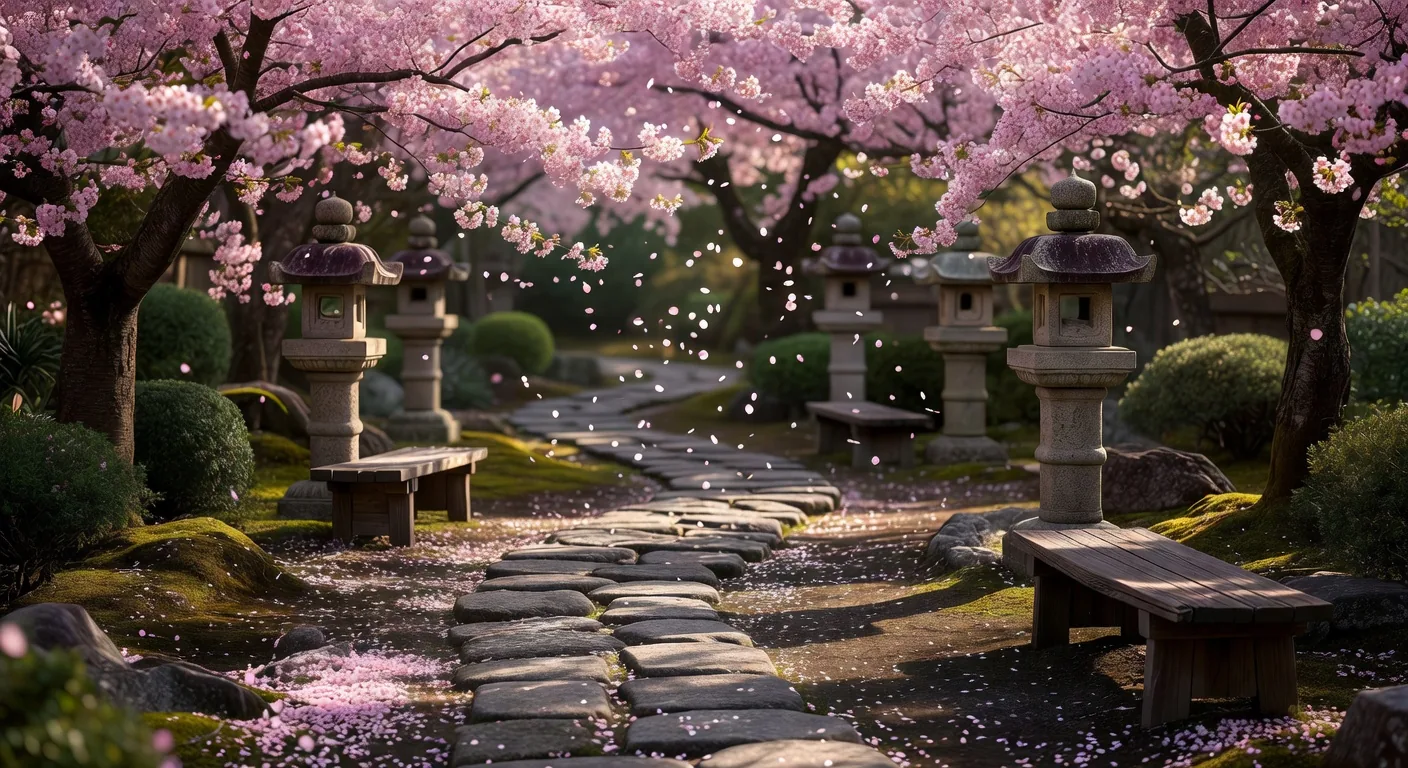
Spring: The Garden Awakens
In Japan, spring begins with the cherry blossom forecast — the sakura zensen (cherry blossom front) moves north from Kyushu in late March, and the nation pauses to celebrate hanami, flower viewing.
For gardeners, spring is the most active season: planting, pruning, feeding, and welcoming new growth after winter's silence. Japanese maple buds unfurl in shades of bronze and crimson, camellias give their last blooms, and wisteria vines swell with bud.
Open the Garden After Winter
Remove yukitsuri rope supports from pines. Inspect all plants for frost damage. Begin feeding with a balanced slow-release fertilizer as soil warms above 8°C.
Cherry Blossom Season Tasks
Water cherry trees deeply after bloom. Apply mulch around the root zone. Deadhead spent camellias. Sow annual seeds for summer colour in tea garden borders.
Divide and Replant Irises
Japanese iris clumps become congested every 3–4 years. Lift, divide with a sharp spade, and replant rhizomes 30 cm apart in boggy soil or pond margins.
Bamboo New Shoot Management
Spring is when bamboo shoots (takenoko) erupt. Remove unwanted shoots immediately at ground level before they harden. This is your most effective control moment.
Spring Garden Checklist
Summer: Lush, Green, Alive
Japan's summer is defined by tsuyu — the rainy season of June and July — followed by hot, humid conditions in August. The garden reaches full lushness, and managing moisture becomes the central challenge.
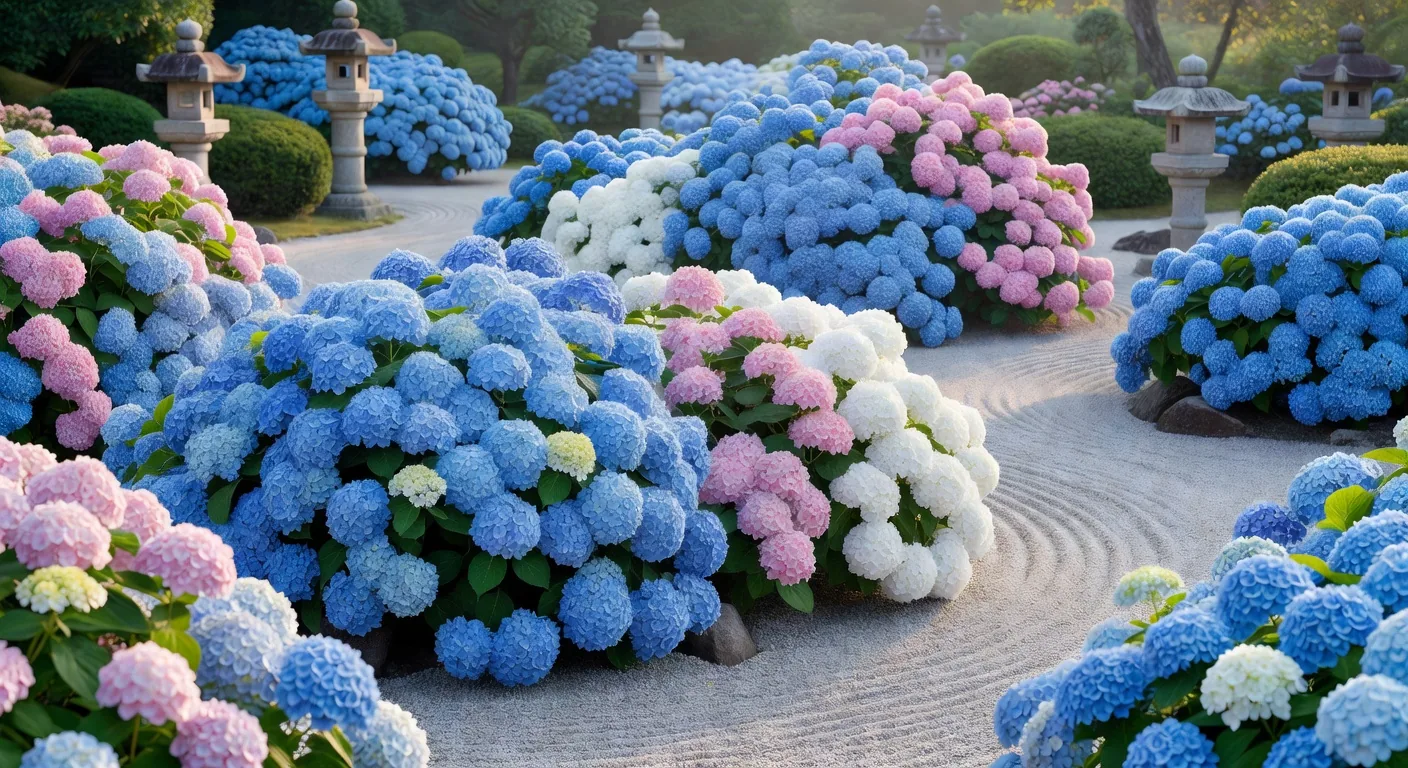
Hydrangeas burst into bloom in spectacular blues and purples. Japanese irises peak. Bamboo sways in the humid air. Moss gardens glow with saturated green. Water features are at their most essential — both aesthetically and as a cooling mechanism.
Rainy Season Maintenance
Tsuyu brings heavy rainfall — check drainage channels. Apply fungicide to susceptible plants. Enjoy the peak of ajisai (hydrangea) season — Japan's most beloved rainy season flower.
Niwaki Summer Trim
Japanese black pines (kuro-matsu) undergo their characteristic summer candle work. Pull back new shoots by half to encourage compact growth and dense needle formation.
Water Garden Care
Hot weather stresses pond ecosystems. Aerate water, reduce feeding of fish, manage algae with barley straw, and top up pond levels lost to evaporation.
Moss Garden Irrigation
Moss gardens need early morning watering in dry summer conditions. Never water in direct sun. Misting systems set for 5–6 am are ideal. Hand-weed carefully — avoid tools that disturb the moss.
Summer Garden Checklist
Autumn: Koyo — The Fire Season
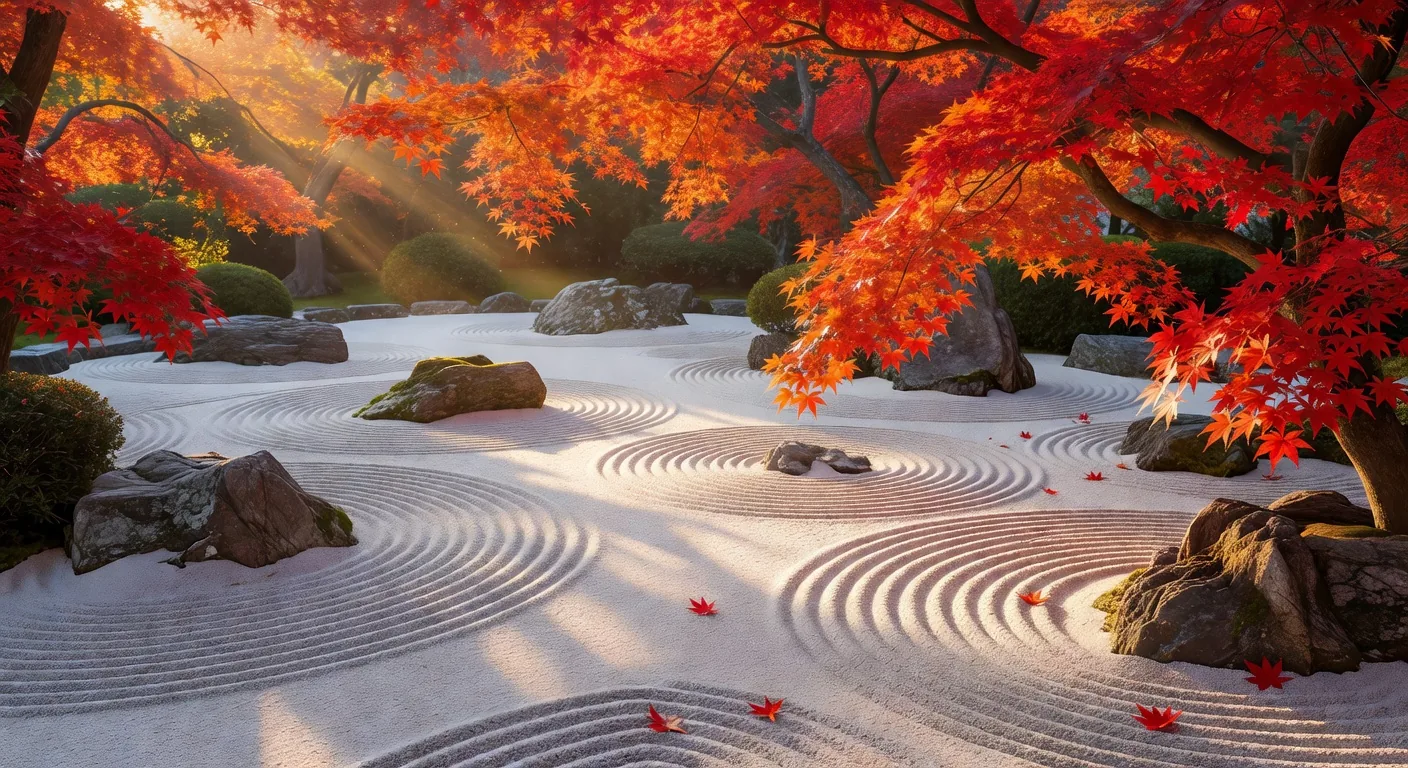
Japan's autumn colour — koyo — rivals even the spring cherry blossom in its emotional intensity. Japanese maple leaves ignite in crimson, scarlet, and gold from October to December, drawing millions of visitors to temple gardens across the country.
Autumn is also a season of harvest, preparation, and reflection. Seeds are collected. Plants are prepared for winter. And the gardener pauses to appreciate the transient perfection of the falling leaf — the very heart of Japanese aesthetic sensibility.
Seed Collection and Propagation
Collect seeds from Japanese maples, tree peonies, and irises. Store in labelled paper envelopes. Take semi-ripe cuttings of azaleas and camellias for overwintering in a cool greenhouse.
Koyo — Autumn Colour Peak
The maple display is at its peak. Sweep fallen leaves daily from moss gardens — even briefly covering moss can kill it. Compose your garden's autumn scene by removing competing plants that diminish the maples' display.
Pond Winterisation Begins
Reduce koi feeding as water drops below 10°C. Remove tender aquatic plants. Install a pond heater to maintain one ice-free area for gas exchange. Check pond depth — 90 cm minimum for koi in cold climates.
Apply Winter Mulch
Mulch around the base of Japanese maples, tree peonies, and tender shrubs to protect roots from frost. Use bark or composted leaf mould — both look natural and break down to feed the soil.
Autumn Garden Checklist
Winter: Silence and Structure
Winter in a Japanese garden reveals the architecture of the planting — the twisted limbs of aged pines, the bare calligraphy of maple branches against grey sky, the geometric perfection of a snow-covered karesansui.
Yukitsuri — the rope supports tied to pine branches to protect them from snow damage — are one of winter's most iconic Japanese garden images. At Kenroku-en in Kanazawa, these conical rope frames appear each November as a signal that winter has arrived.
Install Yukitsuri Supports
Tie a central stake to the top of pine and cypress trees. Fan ropes outward and down to major branches. The aesthetic result is as beautiful as it is functional — these conical rope sculptures are garden art in themselves.
Winter Pruning of Maples
The ideal time to prune Japanese maples is when fully dormant (December–February). Remove crossing and inward-growing branches. Reveal the tree's natural structure and clear sightlines through the canopy.
Plan and Order for Spring
Winter is the gardener's study season. Order new plants, read garden history, sketch design ideas. Visit Kyoto's winter gardens — stripped of foliage, their geometry and stone work are most legible in winter.
Early Spring Preparation
Prune bonsai while still dormant. Check bamboo root barriers. Begin hardening off any tender plants overwintered under cover. The first plum (ume) blossoms signal that spring is just weeks away.